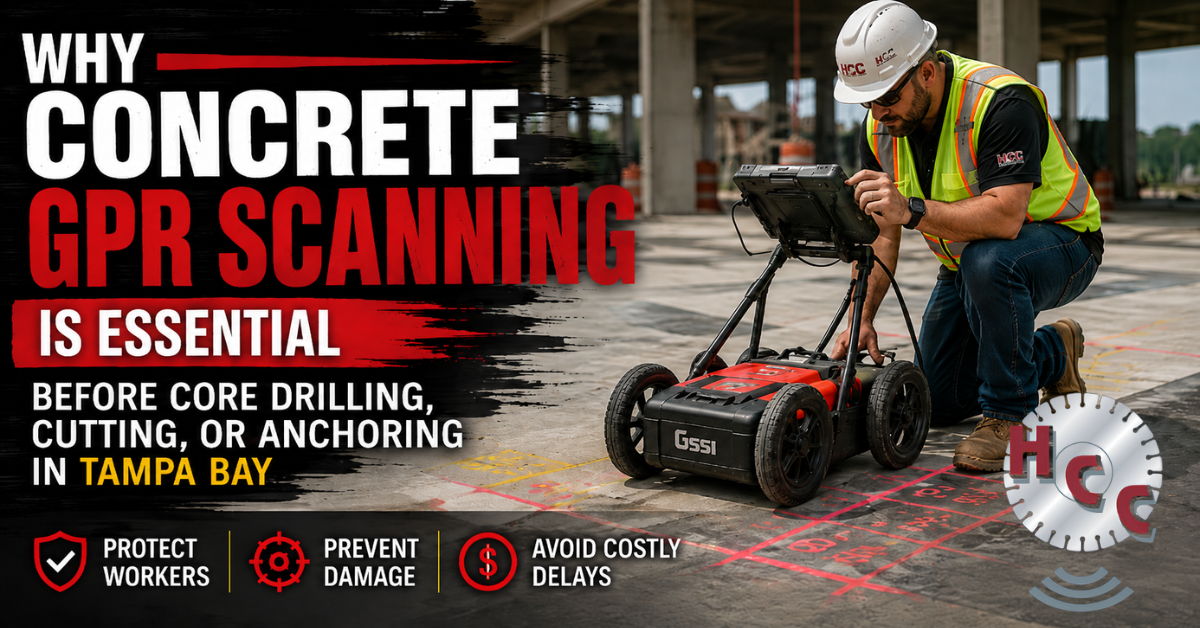
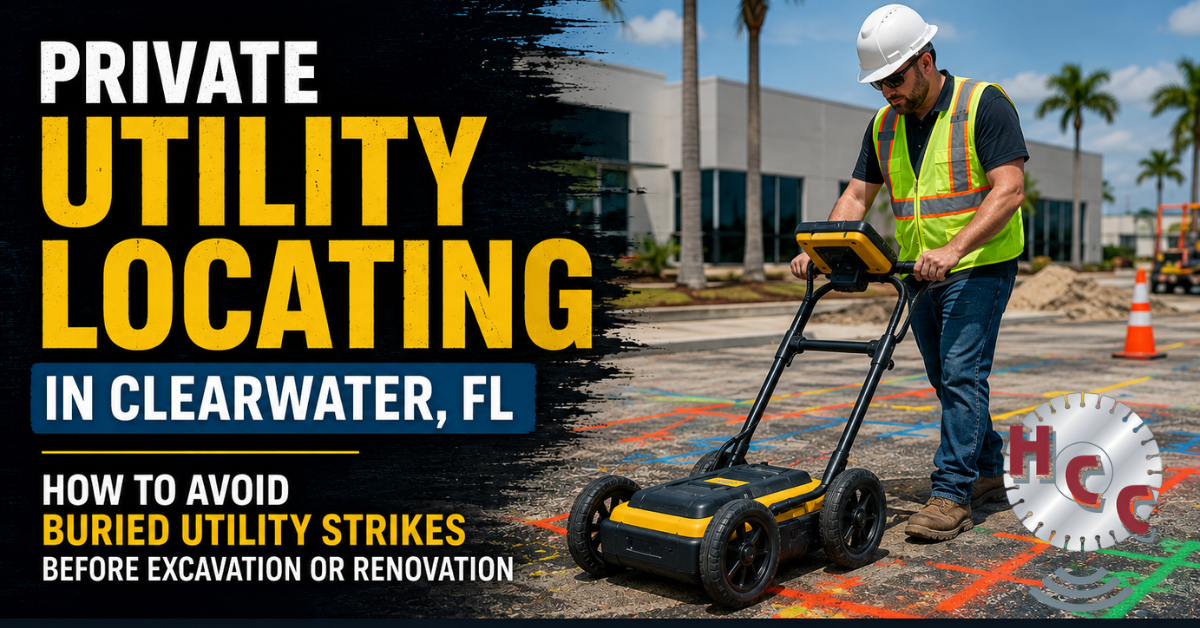
Before any excavation, trenching, drilling, coring, saw cutting, or renovation work begins, contractors need to know what is hidden below the surface. Buried utilities, embedded conduits, unknown lines, abandoned pipes, and subsurface obstructions can create serious safety risks and costly project delays. That is why private utility locating is an essential step for construction, renovation, and property improvement projects in Clearwater and across Tampa Bay.
Public utility marking is important, but it does not always cover everything on a jobsite. In many cases, public utility locates only mark utility-owned lines up to the meter or public right-of-way. Private lines on the property may remain unmarked unless a private locating team is brought in. For contractors, property managers, commercial owners, and developers, that gap can become expensive very quickly.
If your project involves digging, drilling, cutting, or renovating on private property, scheduling utility locating Clearwater FL services can help identify hidden risks before crews start work.
What Is Private Utility Locating?
Private utility locating is the process of identifying and marking underground or embedded utility lines that are not typically covered by public utility marking services. These may include lines that run beyond the meter, between buildings, under parking lots, beneath slabs, across commercial properties, or around industrial facilities.
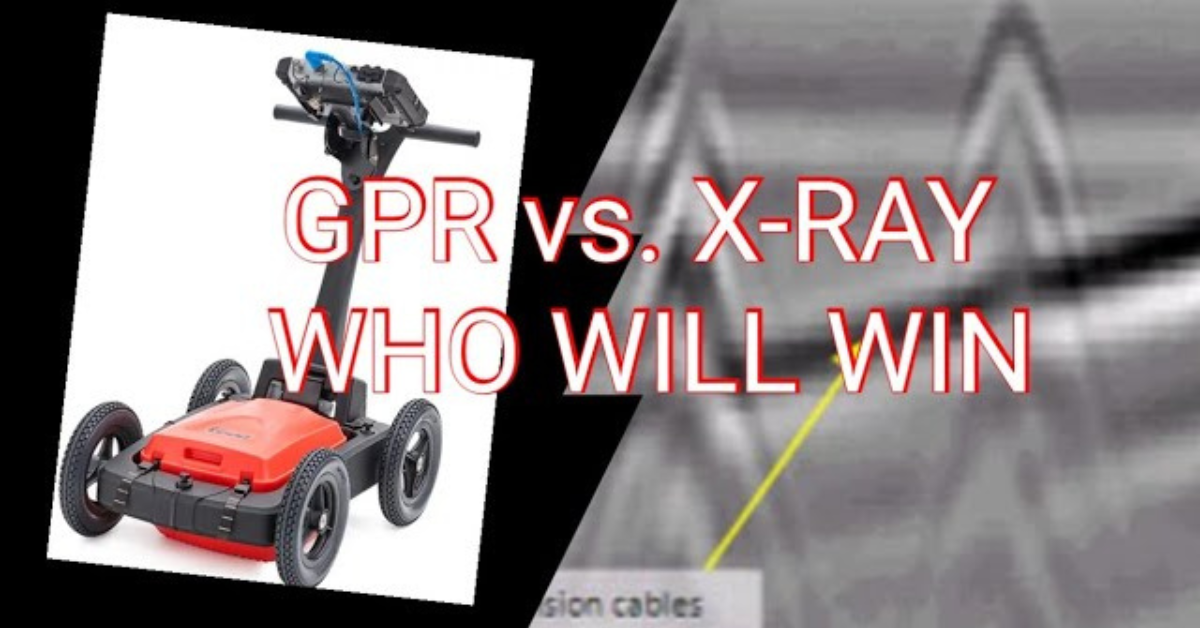
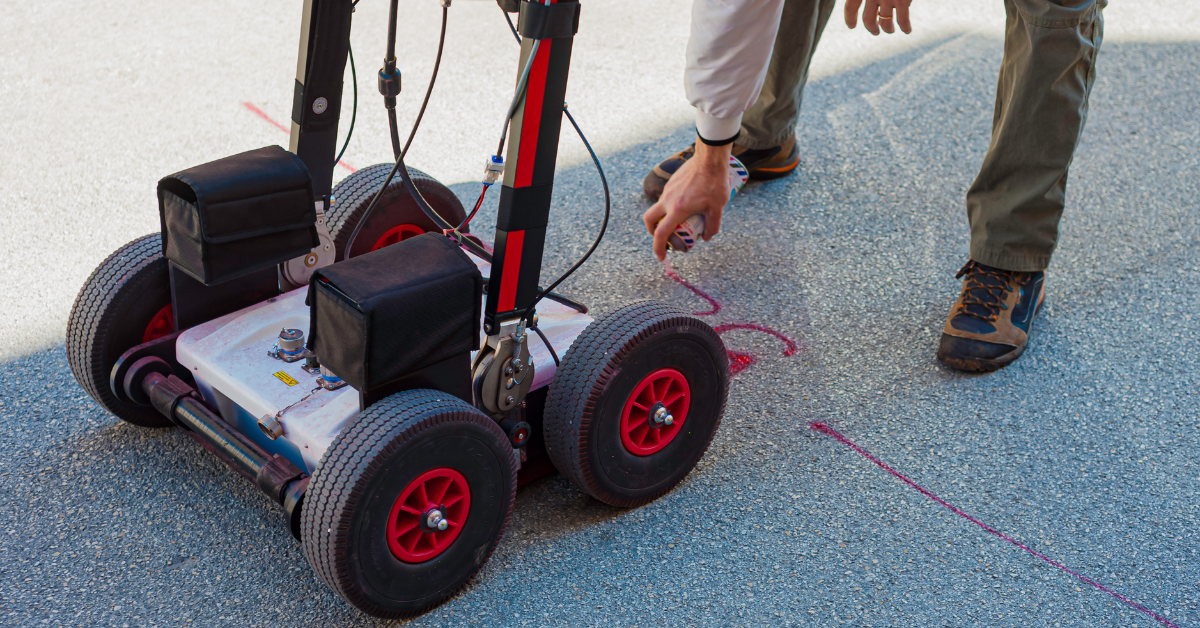
Private utility locating may use ground penetrating radar, electromagnetic locating, signal transmitters, and field investigation methods to detect and mark hidden utilities. The goal is to give contractors a clearer understanding of what is below the surface before excavation or renovation begins.
A private utility locating team may help identify:
- Electrical conduits
- Communication and telecom lines
- Water lines
- Sewer and storm drainage lines
- Gas lines
- Irrigation lines
- Unknown metallic or non-metallic utilities
- Abandoned or undocumented utility paths
- Subsurface obstructions or voids
For commercial properties, private locating is especially important because site drawings are often incomplete, outdated, or unavailable. Even when plans exist, field conditions may not match what is shown on paper.
When Do Contractors Need Private Utility Locating?
Contractors need private utility locating before excavation, trenching, boring, drilling, saw cutting, core drilling, or renovation work that could impact hidden utilities. If the work involves disturbing the ground, penetrating concrete, or modifying existing structures, locating should happen before the first cut or dig.
Private utility locating is commonly needed before:
- Excavating for new utilities
- Trenching for electrical, plumbing, or drainage work
- Installing signs, poles, fencing, bollards, or gates
- Saw cutting concrete or asphalt
- Core drilling through slabs, walls, or foundations
- Renovating commercial buildings
- Working in parking lots, loading areas, and sidewalks
- Installing site lighting or security systems
- Performing tenant improvements in older buildings
- Repairing or upgrading underground infrastructure
For contractors working in Clearwater, Tampa, St. Petersburg, Largo, Dunedin, Palm Harbor, and surrounding areas, private utility locating helps reduce the risk of unexpected strikes in busy commercial and industrial environments.
Why Public Utility Marking May Not Be Enough
Many contractors assume that calling for public utility marking is enough. While it is a critical first step, it may not identify all lines on private property.
Public utility marking typically focuses on facilities owned by utility providers. However, many properties have private utility systems that are installed, maintained, or modified by owners, tenants, contractors, or facility teams. These lines can include parking lot lighting circuits, private water service lines, sewer laterals, irrigation systems, fire protection lines, communications conduits, and power feeds between buildings.
This is where private utility locating fills the gap.
A commercial property may have years of undocumented modifications. A retail plaza may have multiple utility routes added during tenant build-outs. An industrial facility may have old lines that were abandoned but never removed. A multifamily property may have irrigation, lighting, drainage, and communication lines running across landscaped areas.
Without private locating, contractors may be relying on incomplete information.
What Can Private Utility Locating Help Identify?
Private utility locating can help identify and mark possible underground or embedded utilities before excavation, drilling, cutting, or renovation work begins.
Depending on site conditions, access, depth, surface type, and material, a private locate may help identify:
- Electrical conduits
- Communication and telecom lines
- Water lines
- Sewer and storm drainage lines
- Gas lines
- Irrigation lines
- Unknown metallic or non-metallic utilities
- Abandoned utility paths
- Subsurface obstructions
- Possible voids or anomalies
Private locating may involve different tools and methods depending on the jobsite. Ground penetrating radar, electromagnetic locating, signal transmitters, and field investigation may all be used to build a clearer picture of what may be hidden below the surface.
The goal is not to guess. The goal is to give contractors better information before work begins.
What Happens If You Skip Private Utility Locating?
Skipping a private locate may feel like a way to save time, but one utility strike can quickly turn a routine job into an emergency.
Contractors may face:
- Utility Strikes
Hitting an underground electrical line, water line, sewer line, gas line, irrigation line, or communication cable can stop work immediately.
A strike can require emergency repairs, utility coordination, inspections, and additional labor.
- Jobsite Safety Hazards
Utility strikes can create serious risks for workers and nearby occupants.
Electrical strikes may create shock hazards. Gas line damage may create fire or explosion concerns. Water or sewer breaks can create unsafe or contaminated work conditions.
- Project Delays
Once a utility strike happens, the schedule can fall apart quickly.
Crews may need to stop work, equipment may sit idle, subcontractors may need to be rescheduled, and the overall project timeline may be extended.
- Property Damage
Damaged utilities can affect more than the immediate work area.
A broken water line can flood a building, parking lot, or landscaped area. A damaged conduit can disrupt power, lighting, internet, security systems, or tenant operations.
- Added Costs
Emergency repairs, downtime, cleanup, equipment delays, and added coordination can increase project costs.
In many cases, the cost of private utility locating is small compared to the cost of fixing a preventable utility strike.
- Liability and Reputation Risk
Contractors are expected to take reasonable precautions before excavation or renovation.
A preventable utility strike can damage client trust, create liability exposure, and affect future project opportunities. Private locating helps show that your team took responsible steps before beginning work.
Private Utility Locating for Renovation Projects
Private utility locating is not only for excavation.
Renovation projects can also expose hidden risks, especially when work involves cutting concrete, drilling through walls, installing anchors, modifying foundations, or creating new penetrations.
In commercial buildings, utilities may be embedded in slabs, routed through walls, or hidden beneath finished surfaces. Contractors may need to locate conduits, pipes, reinforcement, or unknown obstructions before making changes.
For tenant improvements, healthcare renovations, retail build-outs, restaurant upgrades, and industrial modifications, locating and scanning can help prevent costly surprises.
When a building remains occupied during construction, avoiding utility damage becomes even more important.
Why Clearwater Contractors Should Work With a Local Locating Team
Local conditions matter.
Clearwater and the greater Tampa Bay area include commercial plazas, coastal properties, older buildings, industrial sites, multifamily developments, municipal facilities, and active construction zones. Each property type can have different subsurface challenges.
Working with a local team like HCC Services FL gives contractors access to responsive support for private utility locating, concrete GPR scanning, and core drilling coordination.
A local provider understands the urgency of jobsite schedules and the importance of clear field markings before work begins.
Instead of guessing, contractors can move forward with better information.
FAQ: Private Utility Locating in Clearwater, FL
- What is private utility locating?
Private utility locating is the process of finding and marking underground or embedded utility lines on private property. It helps identify utilities that may not be marked by public utility services, such as private electrical conduits, water lines, sewer laterals, irrigation, telecom, lighting, and unknown site utilities.
- When do contractors need private utility locating?
Contractors need private utility locating before excavation, trenching, boring, drilling, saw cutting, core drilling, anchoring, or renovation work that could damage hidden utilities.
It is especially important on commercial, industrial, multifamily, and older properties with incomplete or outdated utility records.
- Is public utility marking enough before digging?
Public utility marking is an important first step, but it may not locate private utility lines on the property.
Private utility locating helps fill that gap by identifying owner-installed or site-specific utilities beyond the public utility scope.
- Can private utility locating prevent every utility strike?
Private utility locating greatly reduces risk, but no locating method can guarantee every hidden utility will be found in every condition.
Results can depend on depth, material, soil conditions, access, and available site information. However, locating before work begins is one of the best ways to reduce avoidable strikes.
Book Private Utility Locating in Clearwater and Tampa Bay
Before your crew digs, drills, cuts, cores, or renovates, make sure you know what is hidden below the surface.
HCC Services FL provides professional private utility locating, utility locating Clearwater FL, concrete GPR scanning, and core drilling support for contractors, property owners, developers, and commercial teams across Clearwater, Tampa Bay, and surrounding areas.
Protect your crew, avoid costly utility strikes, and keep your project moving safely.
Book a scan with HCC Services FL before excavation or renovation begins.